When it comes to your home, you probably do not want a showroom. You want a home that can handle real life: kids, pets, Amazon returns, and the random soccer sock that appears out of nowhere. You also want it to feel like an elevated version of yourself, not like you copied someone else’s Pinterest board.
This is a message I read again and again throughout Nate Berkus’ new book, Foundations. It is filled with dreamy rooms, yes, but the thing that really lands is how practical his choices are. The man is obsessed with storage, function, and where real people will put their stuff. Then, he layers in all that gorgeous, collected style he’s so famous for.
Recently, Rachel interviewed Nate on the podcast, which was our first ever conversation recorded while hiking. Because around here we’re fanatical about getting your daily movement in– and if it can come with a chat about falling in love, raising children and how to style your bookshelf? Yes please! Nate treats organization as an aesthetic. Not separate from beauty, not something hidden behind cabinet doors, but a core part of how a home expresses itself.
Here are four small, very doable Nate-inspired upgrades that can make your house feel calmer and more beautiful within the week.
1. Fix the Front Door Drop Zone.
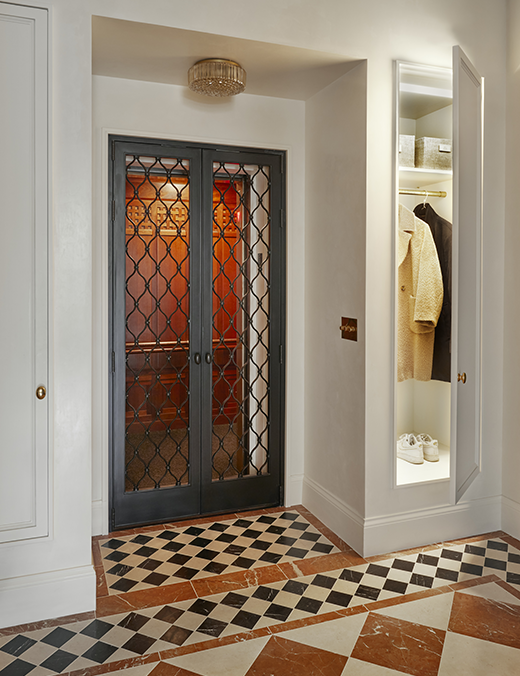
Nate is ruthless about entries. He does not want to see shoes, mail, keys, or backpacks the second you walk in. His goal is a clear, welcoming moment, with the practical stuff tucked just out of sight in a closet, chest of drawers, or armoire.
So look at your front door area and ask one question: What do I actually need to reach for here, and what is just clutter? ? Then, try this:
- Give everything a hidden home.
- If you have a coat closet, double your hanging space by adding a second rod halfway down.
- Add hooks to the back of the door for bags and backpacks.
- Use a low shoe rack or closed bins on the floor so shoes are not the first thing you see.
- Swap the console table for real storage.
If there is room, trade in a leggy little table for a vintage chest, semainier, or small armoire. Drawers instantly turn “pile of random things” into “contained and calm.” - Style the top like a still life, not a catchall.
- One tray for keys and sunglasses
- One small lamp for warmth
- One framed photo or small piece of art
That is it. No permission slips. No stack of mail. No returns.
This is classic Nate: same amount of stuff, better decisions about where it lives.
2. Upgrade One Utility Space With a “Project Light Bulb.”
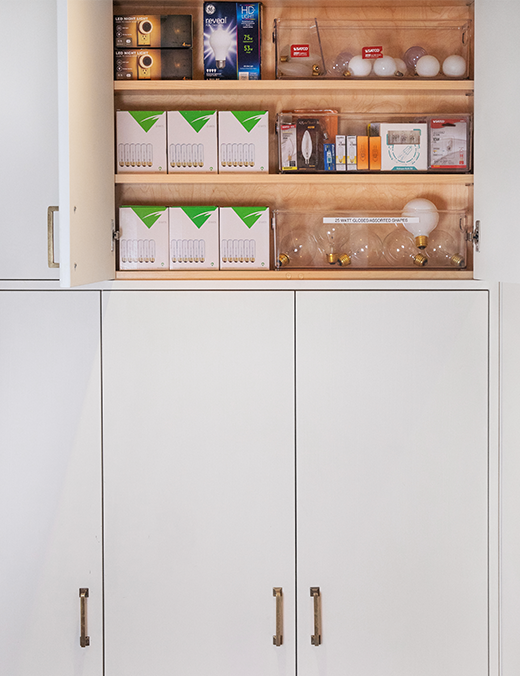
One of my favorite stories in the book is Nate’s “Project Light Bulb.” Years ago his house had tons of different fixtures and every time a bulb went out, it turned into a scavenger hunt. So he pulled every light bulb in the house, sorted them by wattage, labeled which fixture each belonged to, and stored them together.
It is such a small thing, but you can feel the relief in it.
You can steal that same mindset for your laundry room or utility closet:
- Decide what actually belongs there.
Nate and professional organizer Julia Pinsky start by defining clear categories: laundry supplies, cleaning products, first aid and medicine, and basic household backups like batteries and light bulbs. Nothing else. - Create zones, even on one shelf.
Group items by category, then give each group its own spot. Laundry on the left, cleaning in the middle, household extras on the right. Use simple plastic or acrylic bins so if something leaks, you can just rinse the bin instead of scrubbing the shelf. - Do your own “Project Light Bulb.”
Take every spare bulb you own, sort by wattage and type, and label where it goes. Put them all into one bin or drawer and label that clearly. Future you, standing on a step stool at 9 p.m., will be so grateful. - Pretty it up just a little.
This is the Nate twist: decant your detergent into a simple glass jar or handsome bottle and keep it next to the washer. Add one small framed photo or found object on the shelf so the room feels intentional and not like a storage closet at a big-box store.
The goal here is not Pinterest perfection. The goal is that your “backstage” spaces feel cared for, the way you care for everyone who lives in your home.
3. Treat Your Closet Like a Tiny Dressing Room.
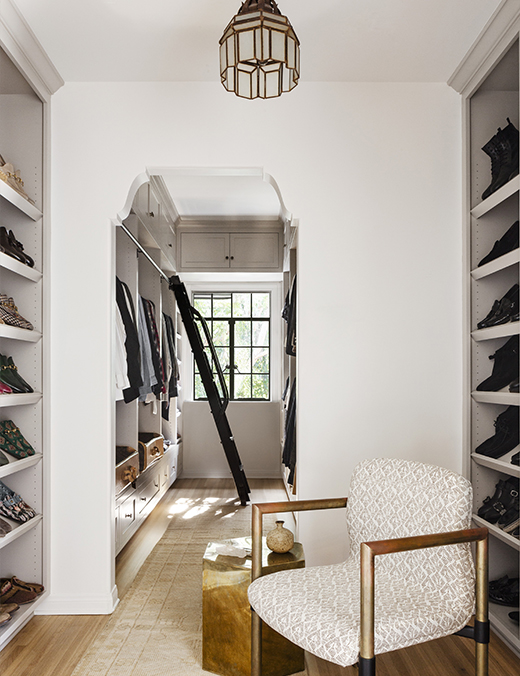
Most of us have at least one closet that feels like it is personally attacking us. You open the door and a handbag slides off the shelf in protest. In Foundations, Nate treats closets like real rooms, with their own lighting, seating, and a clear organizational language. Even if you are not building custom cabinetry, you can borrow his habits.
Pick one closet to transform and try this:
- Invest in a few clever inserts.
Nate loves drawer dividers so you can file folded tees vertically, not stack them in toppling piles. That one change makes it easier to see what you own and put things away quickly. - Sort shoes by style, then by color.
High heels together, sneakers together, flats together, lined up light to dark. It sounds fussy, but it actually saves time because you can scan for “black flats” in one place rather than hunting through the whole floor. - Give accessories a real system.
- Use a tray insert or small divided box for jewelry.
- Roll belts or ties and give each its own little square.
- Stuff handbags so they keep their shape and do not collapse into a heap every time you grab one.
- Leave one shelf just for beauty.
This is straight from Nate: in a room that is all function, leave one open shelf and style it with things that make you smile. A small framed photo, a travel souvenir, or a candle you love. It turns “closet” into “dressing room” instantly.
For a woman in the thick of midlife, this feels like a little daily gift to yourself. You are not just getting dressed. You are stepping into a space that reminds you you exist too.
4. Don’t Allow Your Work Corner to Become the House Junk Drawer.
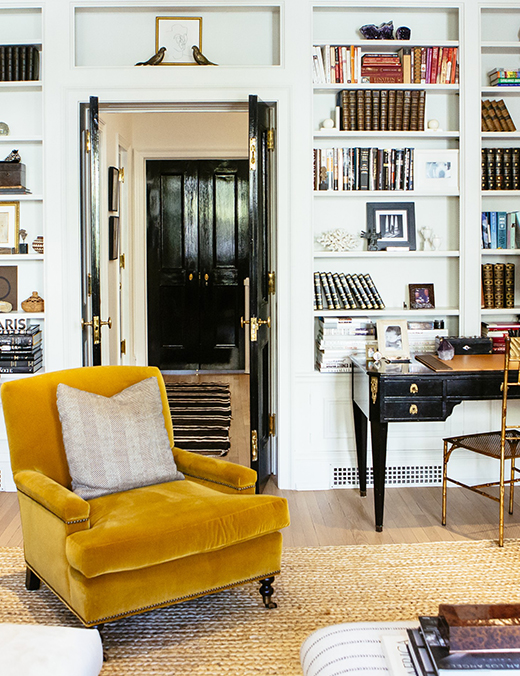
Most of us have some version of a home office now, even if it is a laptop on the end of the dining table. Nate is clear about one thing: do not let that space become overflow storage for everything that does not fit anywhere else.
You deserve a spot that feels calm and capable, even if it is tiny.
Here is how to borrow his approach without buying anything new:
- Choose one surface that is “the office.”
A corner of the kitchen counter, the end of the dining table, a small desk in your bedroom. That surface is now off limits for random piles. Work things only. - Upgrade your containers.
Nate talks about using a handsome cup for pens or a small bowl for paperclips, instead of plastic desk organizers that scream “supply closet.”
Grab a mug you love, a small silver or ceramic bowl, a shallow dish for sticky notes and cords. Same function, much nicer to look at. - Add one small lamp and one piece of art.
A vintage lamp or even a simple table lamp instantly makes the area feel intentional instead of temporary. A tiny framed print or photo on the wall behind your laptop gives your eye somewhere pleasant to land between emails. - Set a “reset rule.”
At the end of your workday, everything goes back to its home: laptop in a basket or drawer, papers stacked in one tray, pens back in the cup. It takes three minutes, but when you sit down the next morning, the space feels like it is on your side.
Nate’s superpower is that he respects the simple stuff. He believes there is something wonderful that happens in a home when there is a place to neatly house all the things that keep it running and all the people in it happy and healthy.
You do not have to tackle your whole house at once. Start with the front door, just your light bulbs, or one closet that is driving you wild. Give yourself one small, Nate-inspired fix and actually finish it.
If you want to go deeper, listen to Rachel’s interview with Nate on the podcast and then grab his new book, Foundations.